Skunk Cabbage (American Skunk Cabbage (Lysichiton americanus) is an Invasive Non-Native Species (INNS) that’s now banned from sale in the UK because of the damage it causes to wetland areas. Like all INNS it outcompetes native plants leading to areas where nothing else can grow. Given how vital and threatened UK wetlands already are, that’s not habitat we can afford to lose.
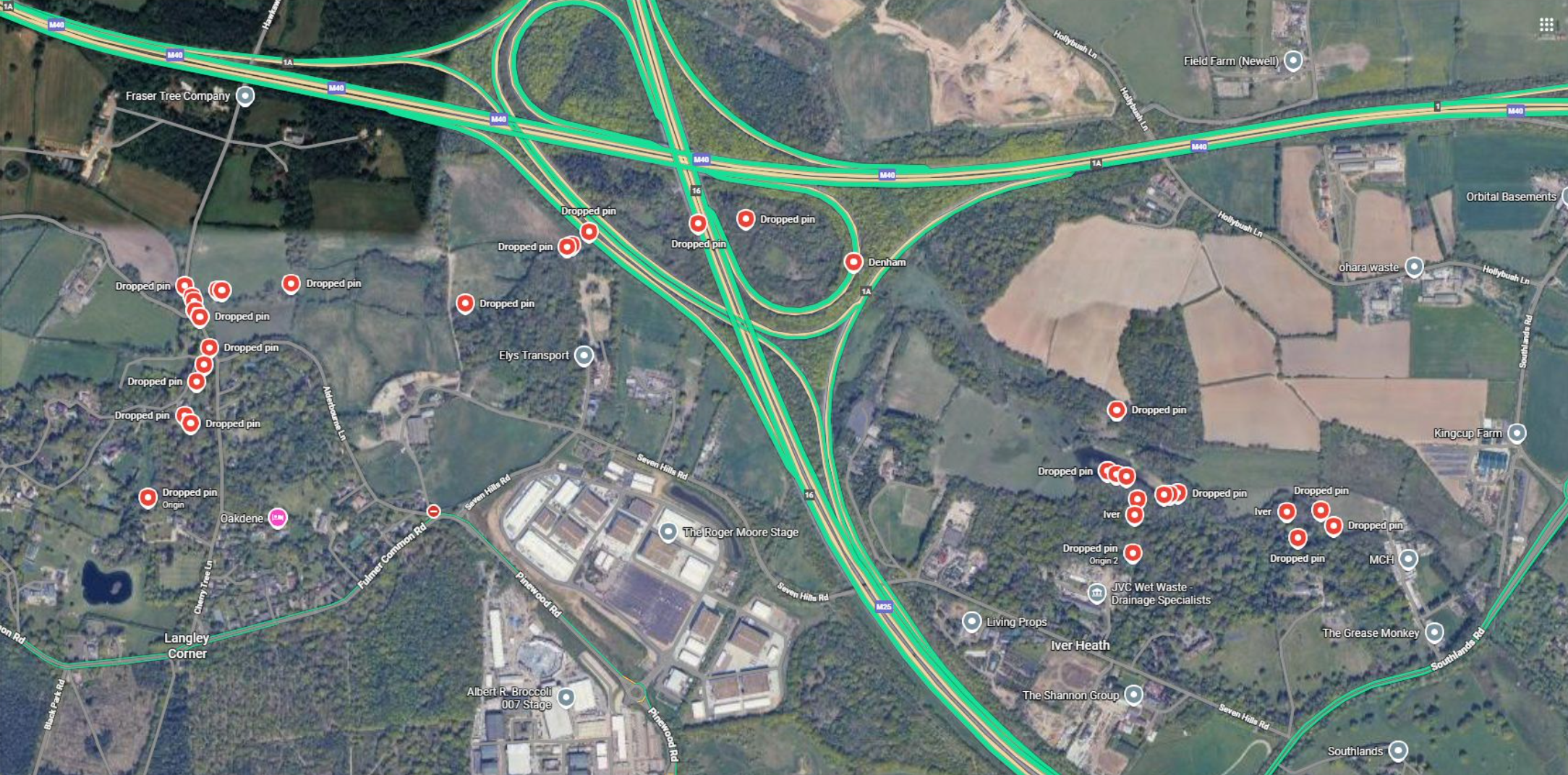
We first noticed Skunk Cabbage at Harding’s Row Nature Reserve in Iver, and when discussing it with the UK Environment Agency they pointed out more sites in the catchment that were affected – and when we went out to survey, this turned out to be most of the length of the River Alderbourne!
As a fully grant funded charity, we need to apply for and secure specific funding for all our projects. Luckily, after putting together a comprehensive plan, we were able to secure support from Affinity Water via their ‘INNS out’ scheme, and from The Buckinghamshire and Milton Keynes Natural Environment Partnership (NEP).
This allowed us to reach out to landowners along the river, and then fully survey and GPS tag all plants and colonies in the project area (a 3km length of the River Alderbourne and the area around Harding’s row).
With locations and the extent of the problem in the initial area assessed, we then went through the rigorous UK Gov permitting procedure to be able to treat them, returning over several weeks in late summer to ensure all located plants were covered.
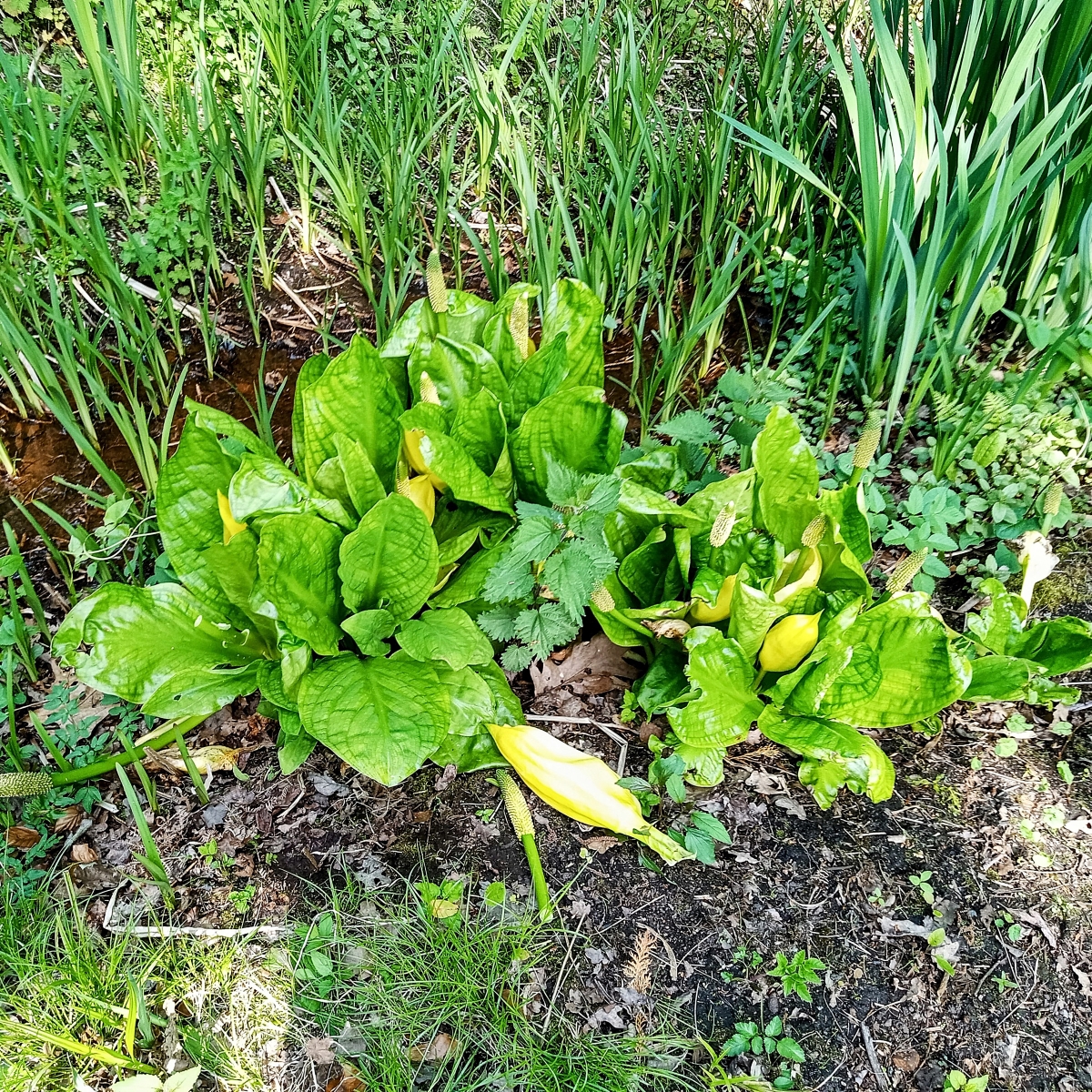
The original clump that spread Skunk Cabbage nearly 6km downstream.
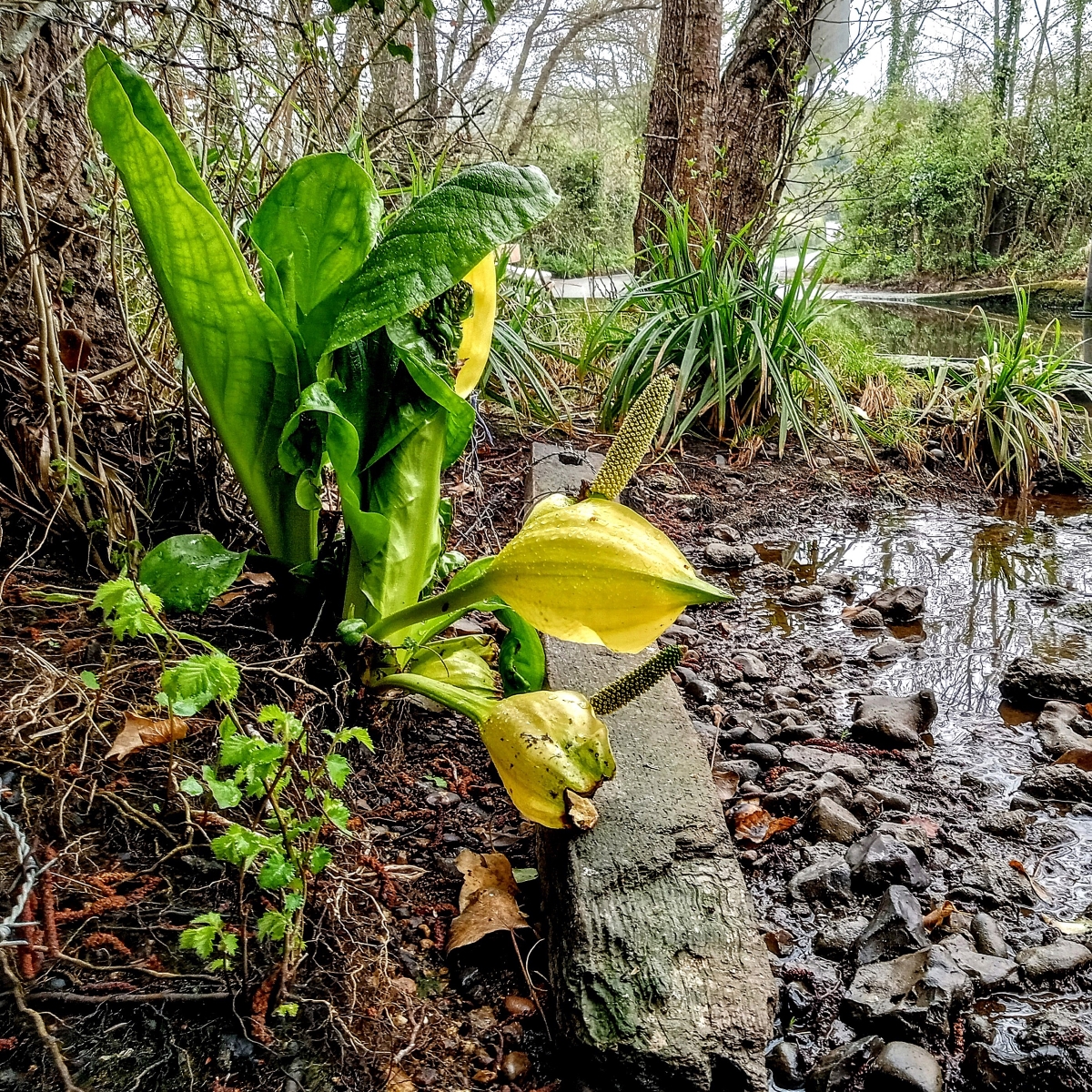
Skunk Cabbage by the Alderbourne ford before treatment.
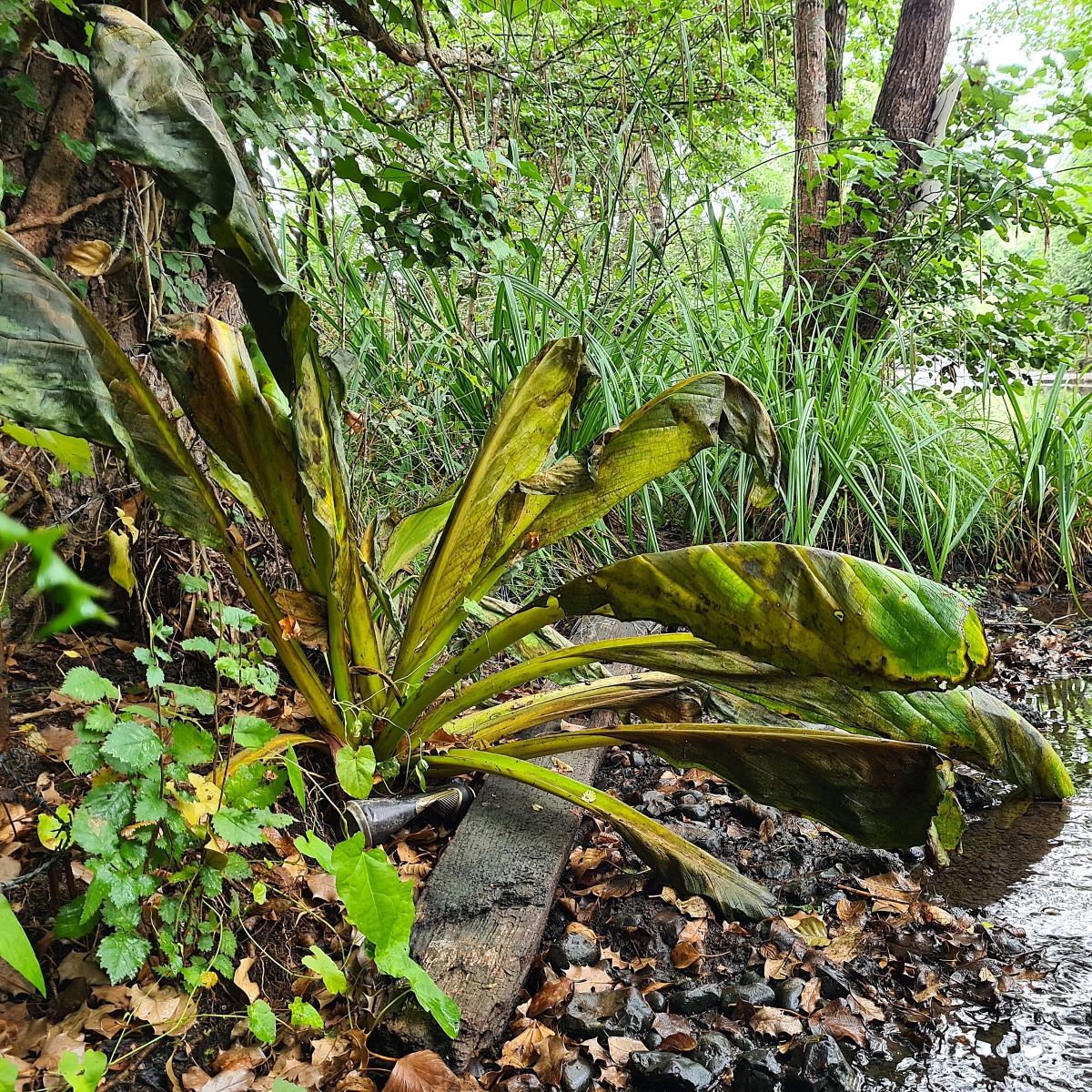
The same plant one week after treatment.
This was followed up by a post-treatement survey to check the work had been effective and had not impacted surrounding plants. The results were exceptionally promising: Skunk Cabbage reacted very strongly to the application of control products (which we applied by brushing leaves not spraying to minimise impact), and due to the tiny quantities of herbicide used and careful application, there was no impact on surrounding native vegetation.
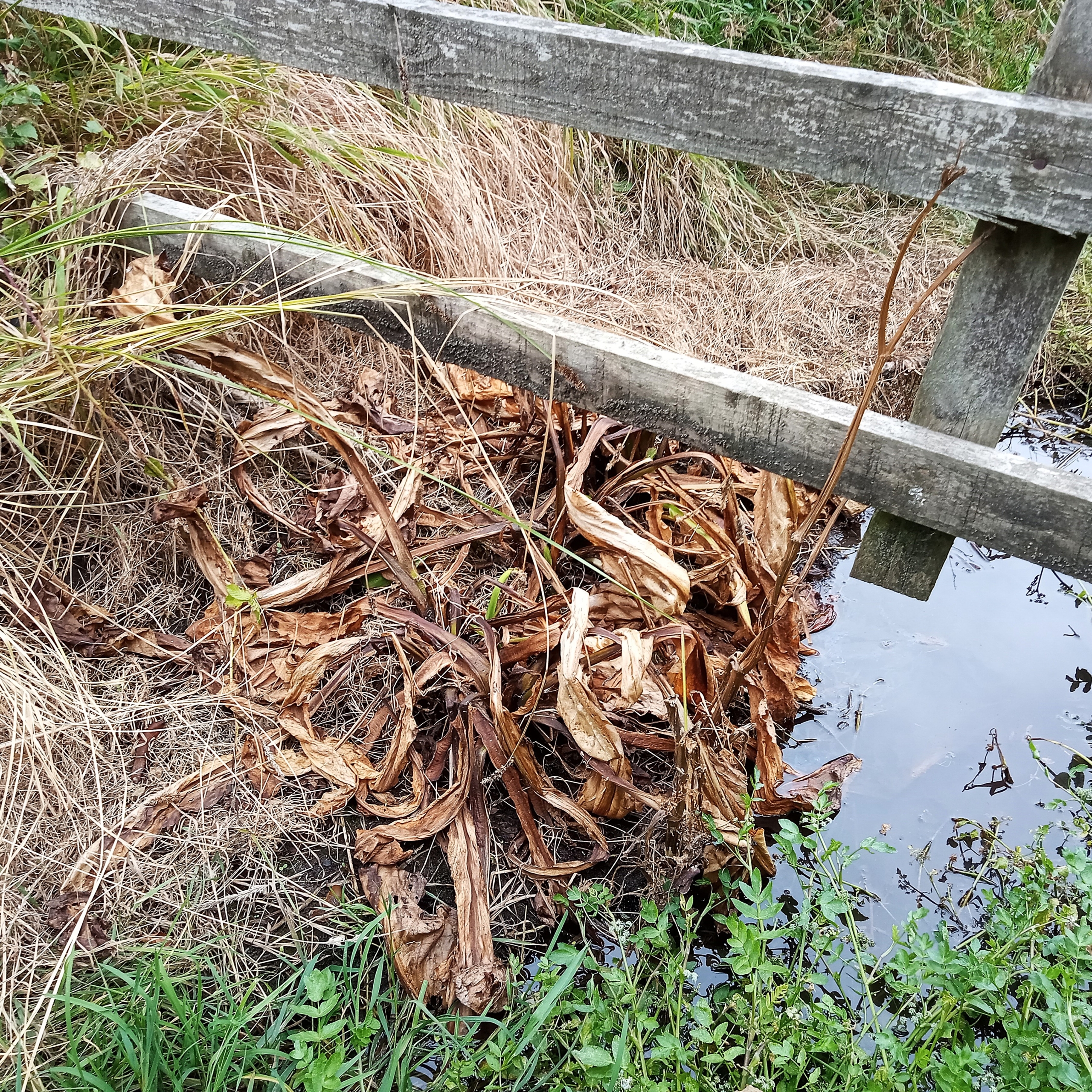
A large clump of Skunk Cabbage after treatment.
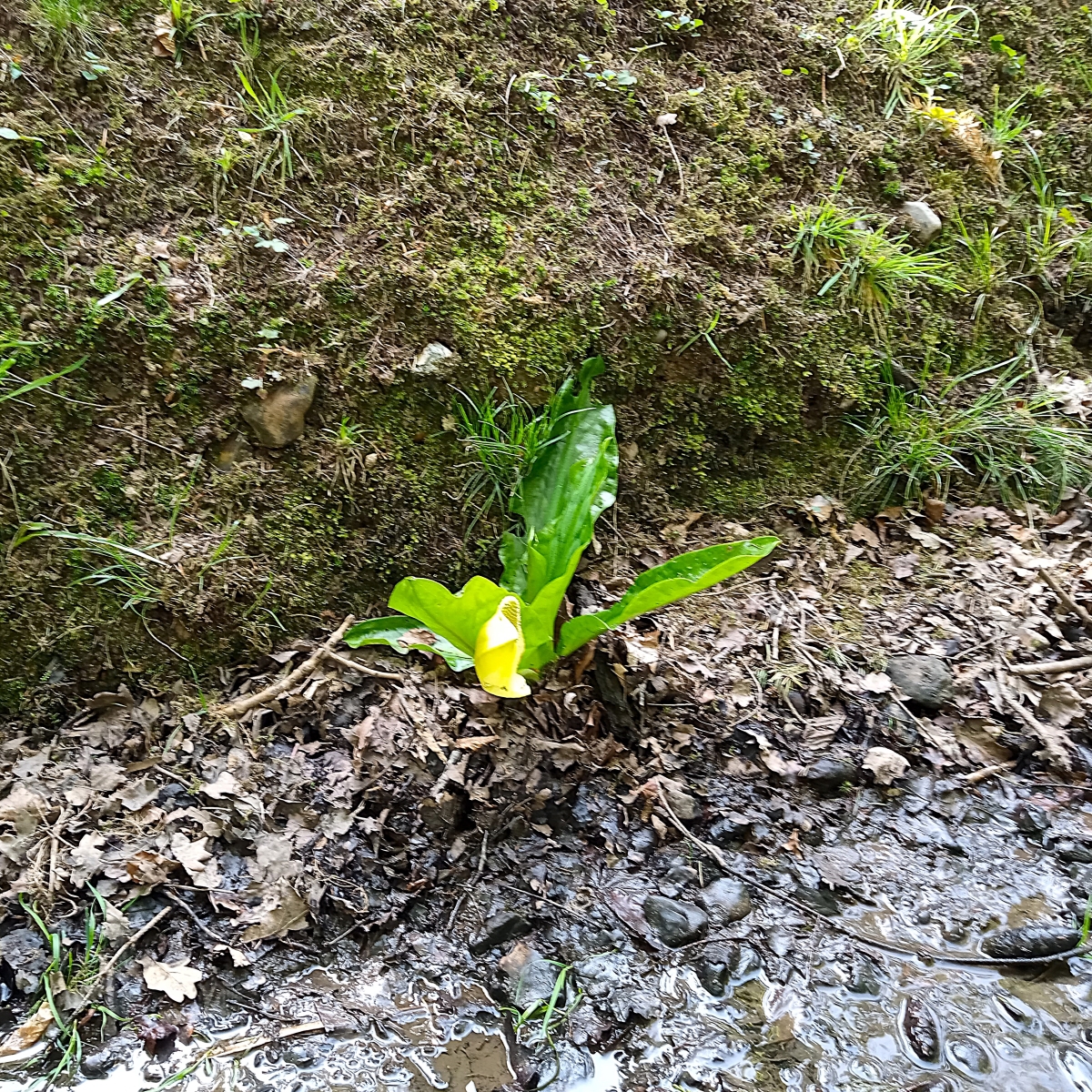
Small Skunk Cabbage plants re-growing from root fragments.
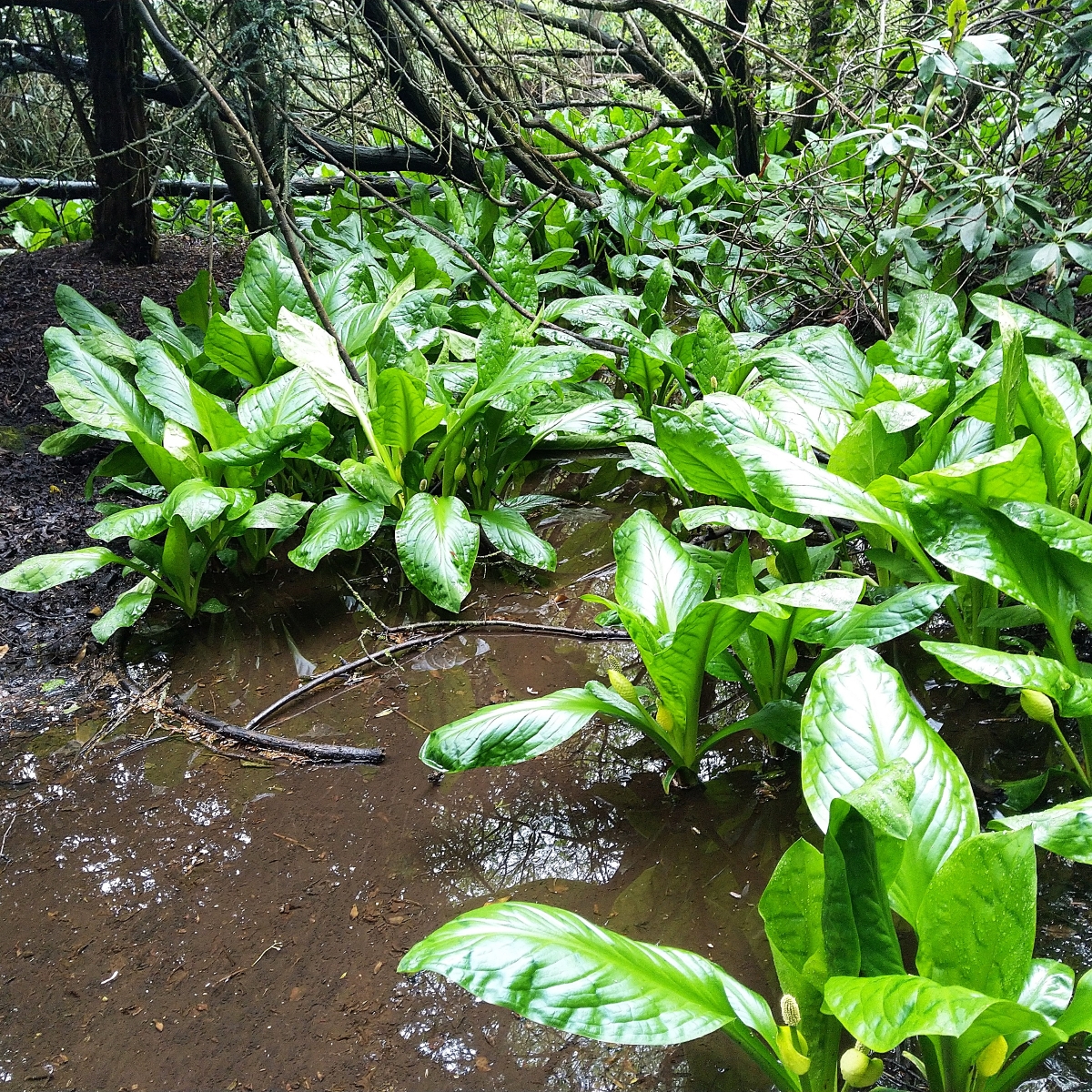
American Skunk Cabbage (Lysichiton americanus) that had replaced native irises at Harding’s Row Nature Reserve.
As a result of this work, we have made huge progress in less than a year on a difficult INNS that was previously unmanaged in the region.
We have additionally located a huge area of Skunk Cabbage and Japanese Knotweed next to protected sites, captured highly important data on multiple other threats to the river and surrounding countryside, and brought together local residents and landowners to raise the profile and potential of the Alderbourne itself.
Thanks to this project, we now know a lot more about the challenges the Alderbourne faces, but critically, we also have a realistic plan to improve the health of the river and access to it.
With huge support from local County and Parish Councillors, we have already held a cleanup removing around a large van full of car parts and litter from the Alderbourne, and are now working together on a modular full river restoration plan that would dramatically benefit the River and the area around it.
All this has been achieved since last winter, for just £10.2K.
The next steps on dealing with Skunk Cabbage are:
- Return visits to tagged sites to check for seedlings (Skunk Cabbage seeds remain viable for up to 7 years).
- Identifying and attempting to secure funding to continue the work we have started, including tacking the 5 square kilometers of INNS we found along the way.
- Putting together a larger project plan and securing funding for the wider works needed to turn the Alderbourne back into the idyllic river it once was.
In time, we hope to help opening up access to more of this rare, relatively natural stream on the edge of the Chilterns to more people. However, even now, everything we do on the watercourse already directly benefits a much wider area: The Alderbourne is one of many tributaries of the Thames, and flows through several population centres before reaching it. UK river health isn’t just for people nearby: our rivers feed our groundwater which is, for many, where we get our drinking water supply.
Failing to tackle INNS along rivers also rapidly leads to the same problems downstream.
So even this “small” project in a hidden corner on the outskirts of west London means real world improvements all the way to the sea: less pollution in groundwater, and less chance that other local authorities and agencies will need to spend public money removing INNS in the years to come.
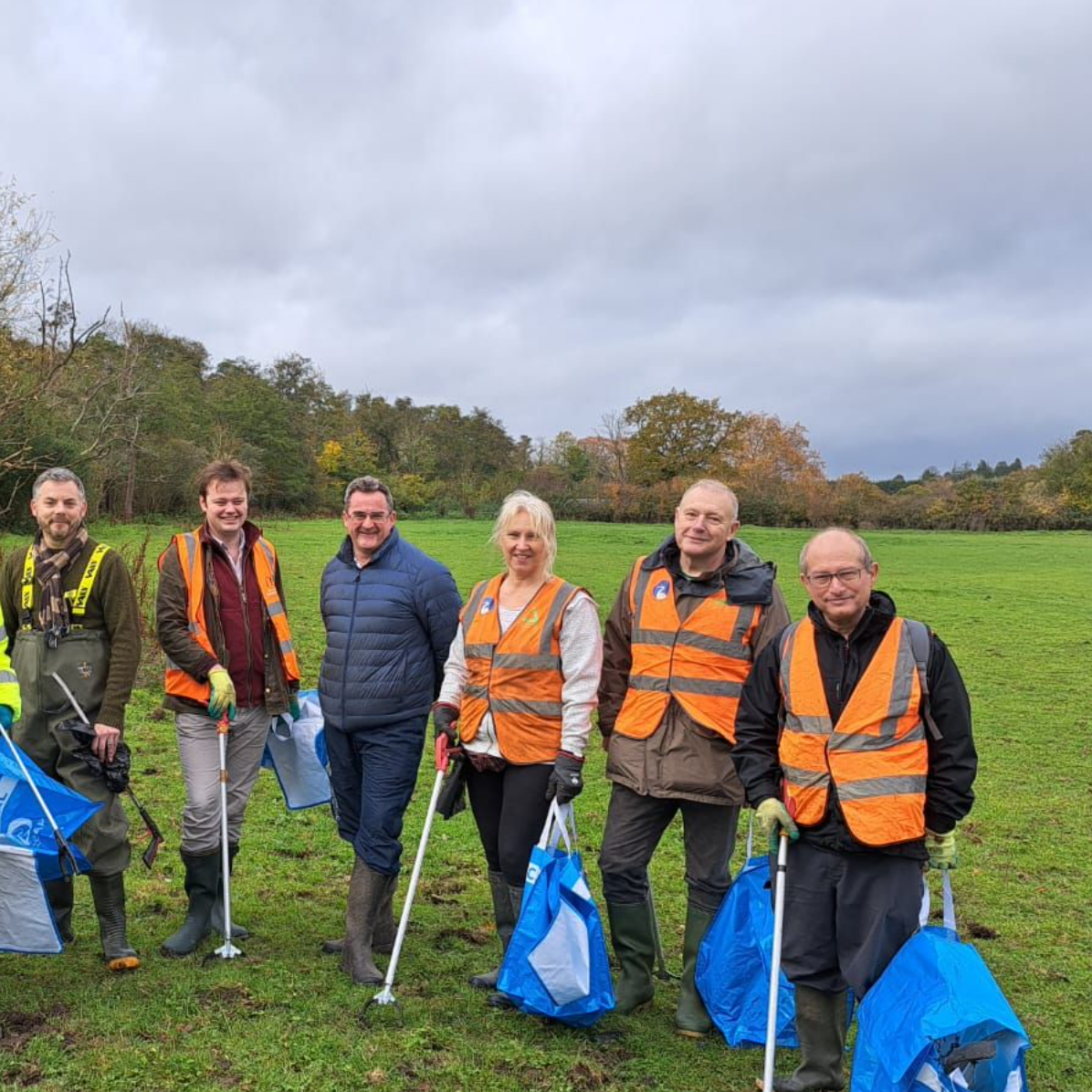
Litter Picking in Fulmer clearing near the Alderbourne River with volunteers, in partnership with Bucks & Fulmer councillors and Tony Booker from REAP UK who recycled all the plastic collected. Made possible by Heathrow Community Trust.
More Information
Matthew Mountain [email protected] Senior PM Rivers, Groundwork South
Many thanks to Affinity Water and Buckinghamshire and Milton Keynes Natural Environment Partnership (NEP) for the funding that made this possible.