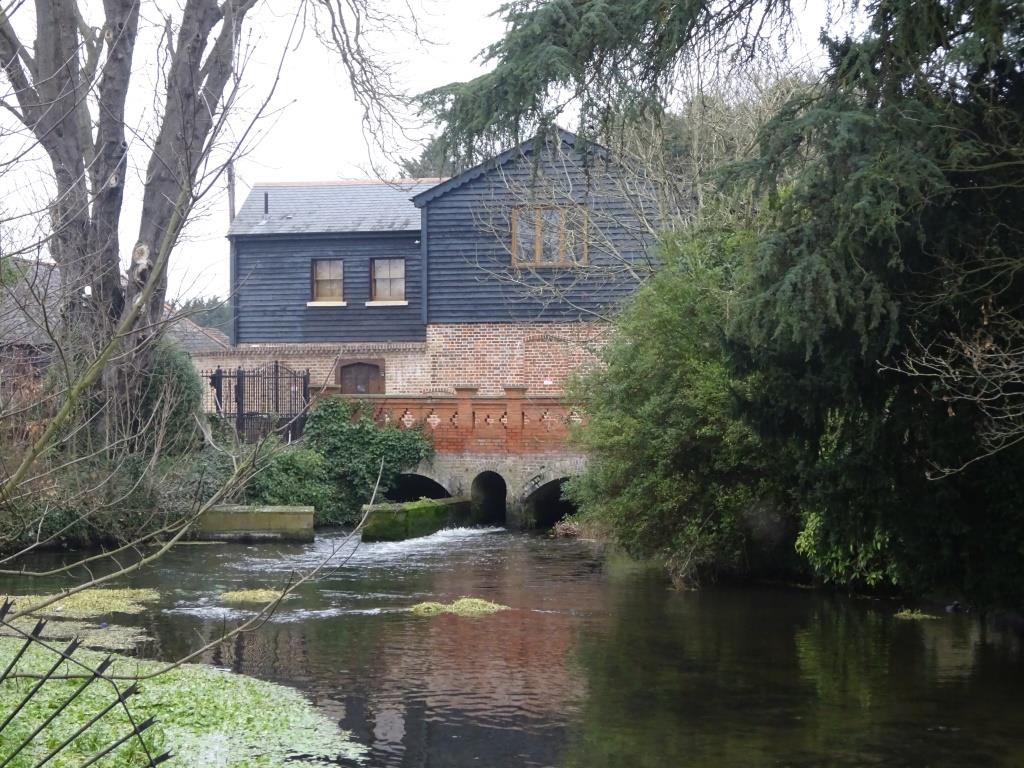
From the western end of the Bailey Bridge across the River Colne in Cricketfield Road, West Drayton, walk across the bridge and along Cricketfield Road. At the main road (Mill Road), cross with care and turn left over the Fray’s River with the former Drayton Mill on your right.
After passing the mill building and crossing a branch of the River Colne, turn right into a driveway signed Waterford House and continue ahead. Turn left after 10 yards off the driveway into a small car park, and then right into the open Mabey’s Meadow where you follow the path ahead. After about 100 yards, just before the woodland, turn right towards the water.
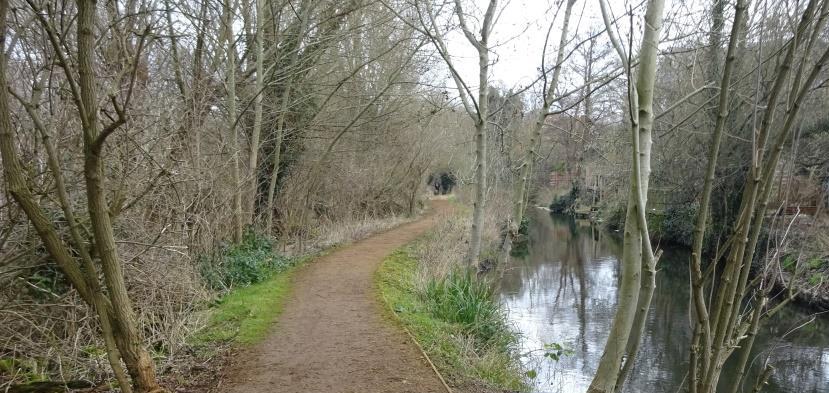
After 50 yards, continue over a foot bridge across a branch of the River Colne. Then turn left along Frays Island with Fray’s River on your right. After ¼ mile look out for a path bearing right which crosses the Fray’s River via a wooden bridge.
Alternatively, just before the bridge, turn left and continue on a rough path to the northern end of Frays Island to a low point where you can see the river ahead with the houses and gardens of Frays Avenue. There is regrettably no way though here, so return to the main path and bridge.
After the bridge, the path emerges in Wren Drive.
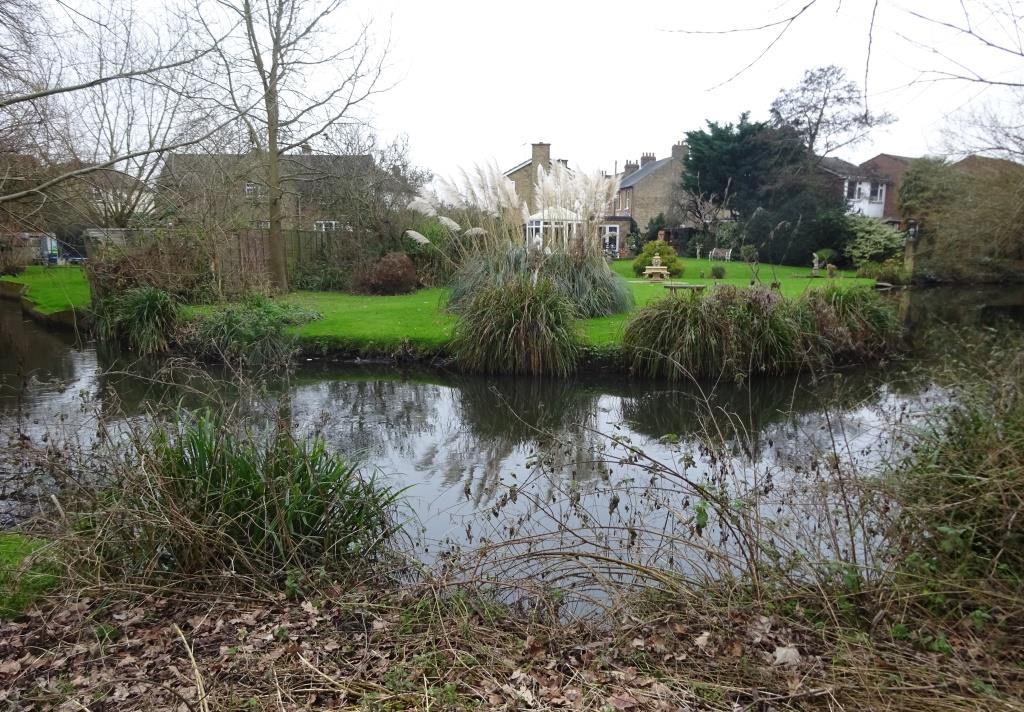
A detour to the left here will take you to the cul-de-sac end of Wren Drive and an attractive grassy bank of the Fray’s River. Return to the main path.
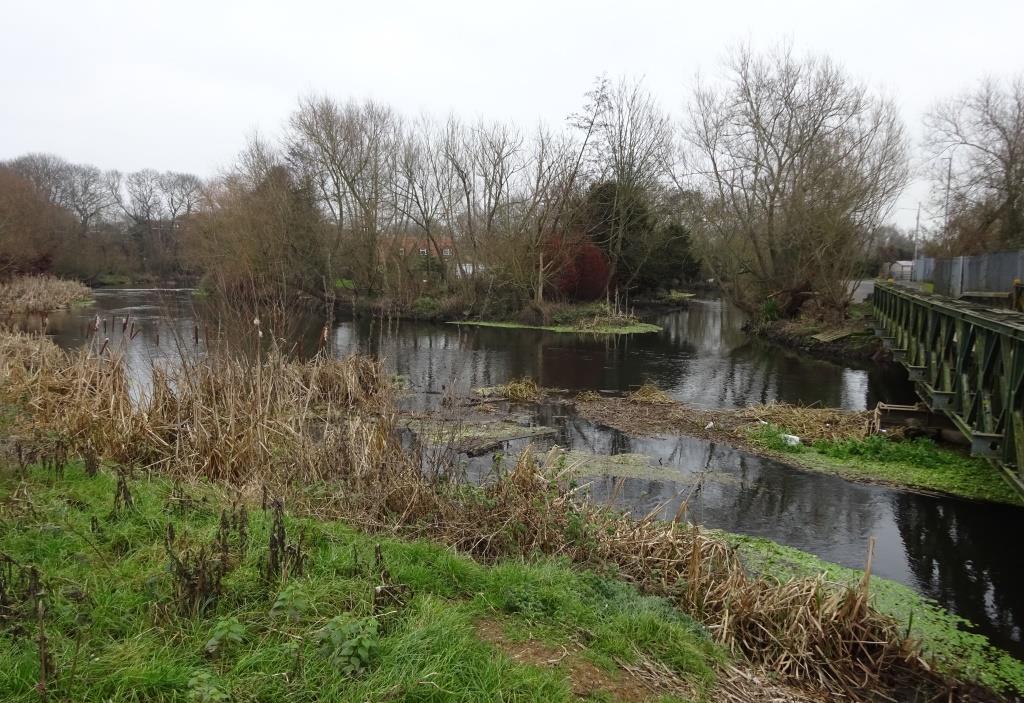
Emerge from Wren Drive into Money Lane opposite Frays Hall. There is now a long section to return to the river. Turn left along Money Lane, noting the ditch on the left which was formerly part of a small branch off and onto the main Fray’s River. Continue for about 200 yards until Money Lane meets the main road (Swan Road) opposite West Drayton Green. Turn left and continue for about 500 yards to Station Road. Here turn left and after about 200 yards take the second on the left into Colham Mill Road. In this area there is an island formed by two branches of the Fray’s River
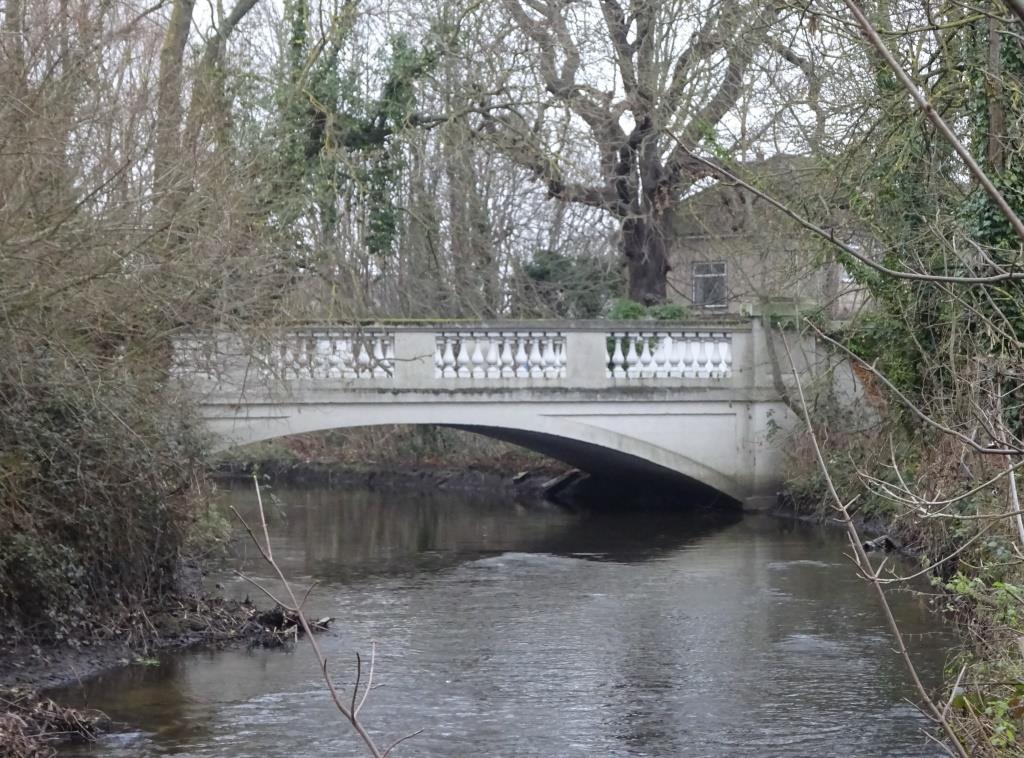
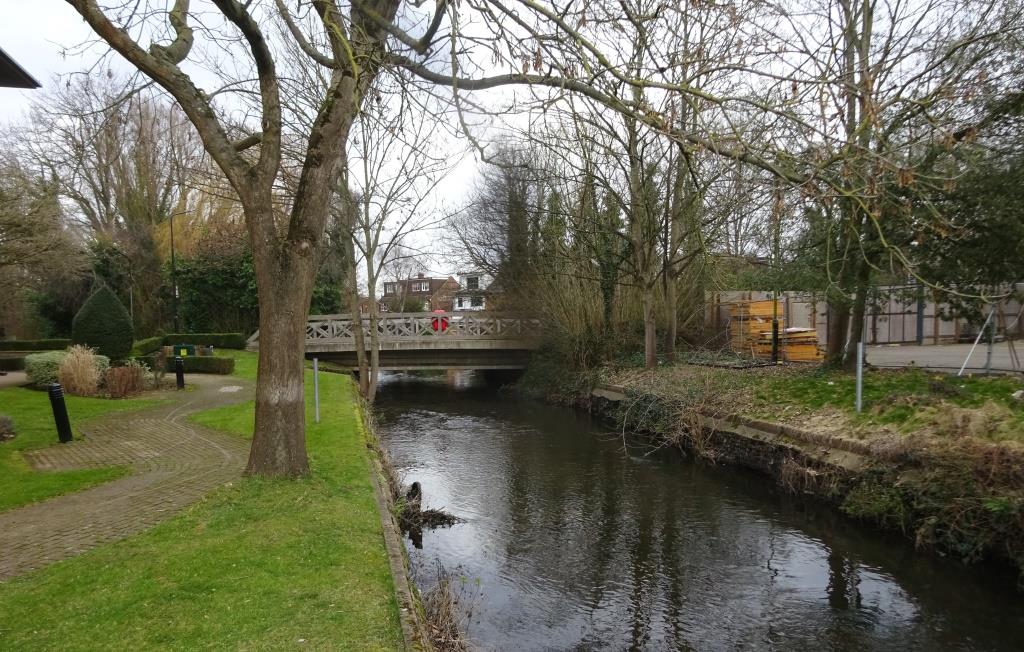
Walk down Colham Mill Road for about 700 yards, over the Fray’s River (eastern branch), bearing left into Frays Avenue, avoiding side turnings, until you reach a bridge over the Fray’s River (western branch).
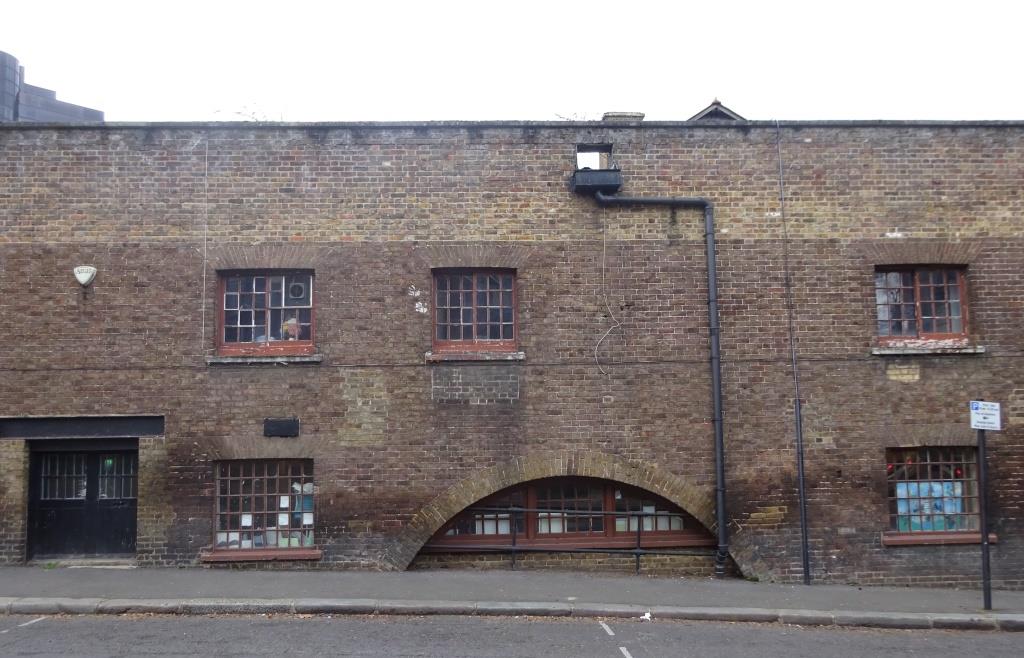
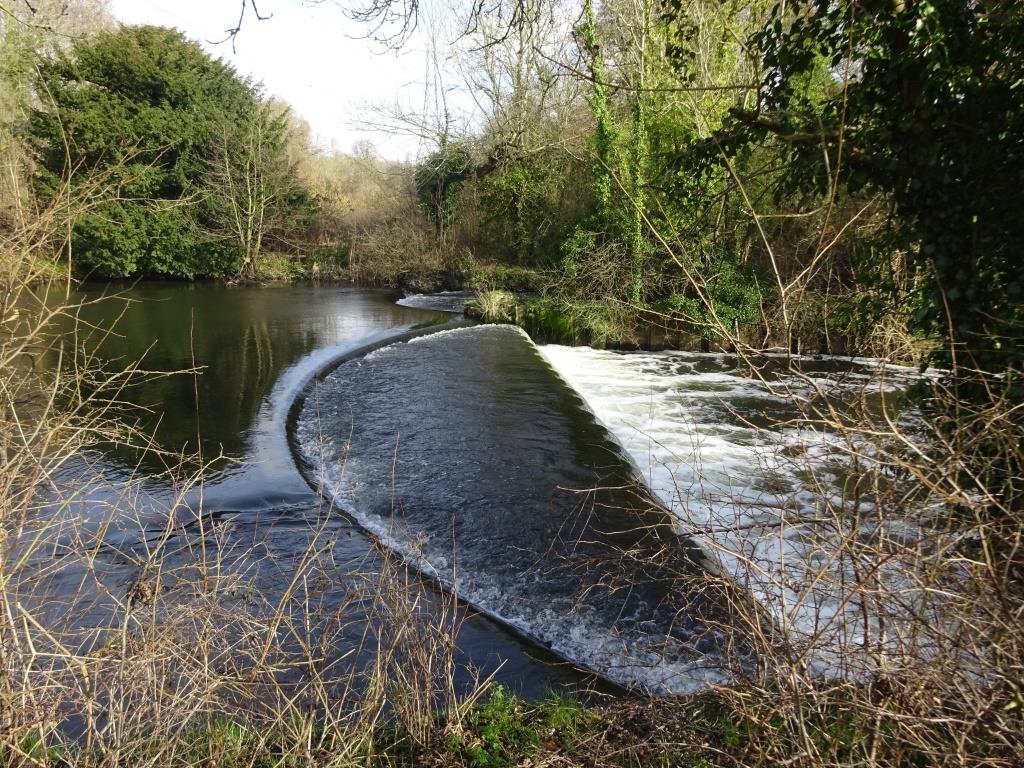
Return the same way, detouring left into Lawn Avenue and into Weirside Gardens to view the Fray’s River (western branch) from bridges. At the latter, note the former Lower Colham Mill buildings and weir. Return into Colham Mill Road over the same bridge over the eastern branch you used before, passing the converted mill building on your left.
Turn left into Humber Close and then left at the railway to the cul-de-sac end to get a good view of the Fray’s River disappearing under the main line of the railway. Return to Colham Mill Road and turn left to the junction with Station Road. Here, turn left, go under the railway bridge, and immediately left into Tavistock Road.
After 40 yards, there is a rising track to your left. Further along this it is theoretically possible to explore views of the Fray’s River, especially via the old track of the former West Drayton-Staines branch line, but the land is a private waste disposal site and security guards may prevent you.
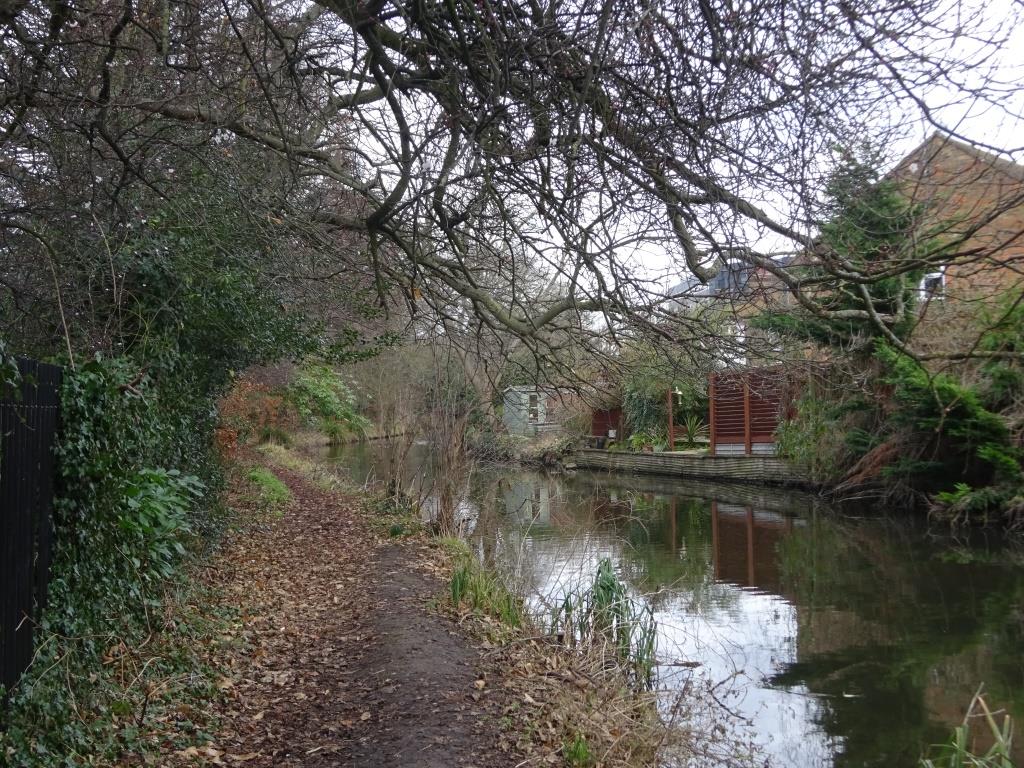
In Tavistock Road, after about 300 yards, with the new houses of Merrivale Mews on your left, take the first opportunity to turn left to the bank of the Fray’s River. On your left you should see a bridge of the former West Drayton-Staines branch railway line as it crosses the river. Turn right and follow the grassy bank between the houses and the river to the next bridge at Trout Road. Here, cross the road and turn right. Take the first left into Wraysbury Drive, and at the first opportunity turn left through the houses to the bank of the Fray’s River again. Turn right and follow it to the point where, half hidden by trees, you can see the River Pinn entering the Fray’s River. For a while you must now follow the bank of the River Pinn. Soon turn left across the Pinn into a green open space, Follow the path half left, with a lake on your right, to the bank of the Fray’s River again. Turn right and follow it for a short while.
Your route turns right away from the bank and heads north across the open space, keeping a second lake on your left, to pick up a path that enters woodland. After a while you will briefly see the river again on your left. Continue slightly uphill to meet the towpath on the Slough Arm of the Grand Union Canal. Just to the left is the canal aqueduct over the Fray’s River.
However, there is no access across the canal here, so you need to turn right along the towpath. At the canal junction, cross the bridge and turn left on the main canal towpath until you meet Packet Boat Lane just after the marina entrance. Go up the slope to the roadway, turn left across the bridge and walk along Packet Boat Lane until you meet the Fray’s River again at Little Britain Bridge.
It may sometimes be possible to shorten this diversion by crossing the Slough Arm via the footbridge to the marina and continuing ahead before emerging on Packet Boat Lane where you turn left and regain the route in the paragraph above.
Continue in the same direction for 100 yards, and then turn right into Old Mill Lane. Use the off-road attractive path on your left along the lakeside. After passing the QVardis establishment on your right, return to the road where you should now be able to access the bank of the Fray’s River again. Continue north in the same direction, passing the point where Old Mill Lane squeezes between the Fray’s River and the River Colne.
Just past the former Cowley Hall Mill building, there is an opportunity to detour right through rough woodland to the bank of the Fray’s River as it heads north east towards Cowley Lock.
Continue north up Old Mill Lane to the junction with Iver Lane. Turn right towards the bridge over the Grand Union Canal. Just before the bridge, turn right through a black metal gate onto a canal bank path leading to moorings. After about 100 yards, scramble down the slope to the right to view the Fray’s River coming from Old Mill Lane and entering brick arched culverts under the nearby canal lock. Return to the canal path and continue south past the two lock gates to get a good view of the lock, lock house and other canalside buildings. Return to the lower lock gate and cross it with care. A view of the Fray’s River can be obtained from the narrow grassed gated area just north of the lock. Then, just before The Malt Shovel PH, turn right onto decking forming part of the public house gardens. Go down the steps and follow the Fray’s River on your right before leaving the pub car park onto Iver Lane. There are views south and north of the Fray’s River from the bridge. Cross Iver Lane.
To your left (west bank) of the Fray’s River there is a track to industrial premises including the London Reclaimed Brick Merchants. Although there are views of the west bank, there is no way through to the north. Between this track and the canal there was a cocoa-nut fibre factory around 100 years ago.
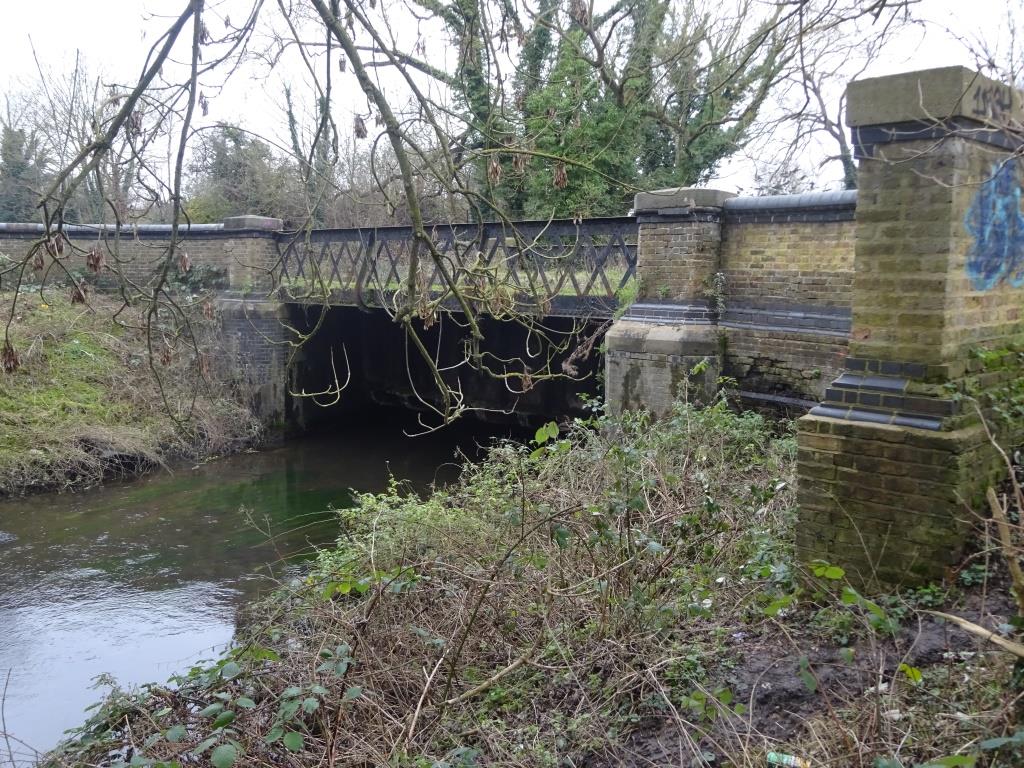
Turn right on the north side of Iver Lane and after 100 yards, turn left into Heritage Close. The road bears left and then straight ahead you can access the east bank of the Fray’s River and continue north into the rear of Barchester Close. However, at present there is no way to continue north without heading east to the main Cowley Road where you can turn left, and then at a small roundabout, turn left into Cowley Business Park. Soon you cross an attractive road bridge across the Fray’s River (where, over a wall, you can the houses of Barchester Close to the south).
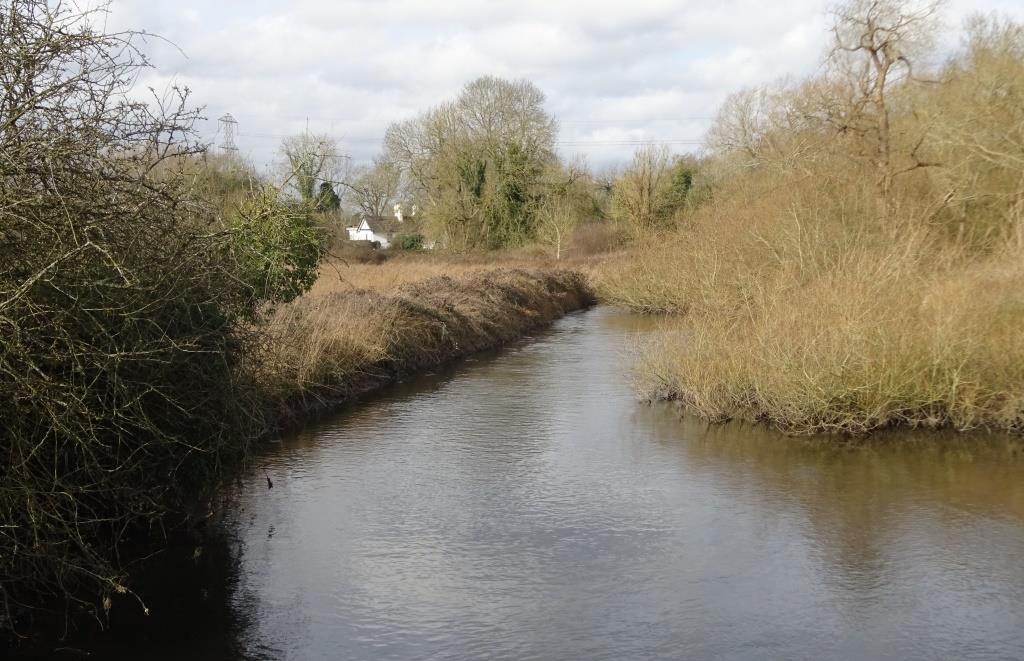
Continue north along the road through Cowley Business Park with Fray’s River running through woodland to your right and the rear gardens of Ferndale Crescent beyond. At the north end of the business park, keep right into an office car park, and at the far right corner, duck through the low hedge into the woodland and the river bank. Continue north along the bank, noting the point where two branches of the Fray’s River recombine at the south end of a small island. Continue north with the river bank on your right and another business park fence on your left. Pass the point where the two branches of the river diverge at the north end of the small island. You soon come to a fence of the Hale Hamilton valve factory, the grounds of which are inaccessible.
Turn left and you eventually reach a business park road leading to the Royal Mail Sorting Office. Turn right, and then at traffic lights turn right again into Cowley Mill Road. When it reaches the main Cowley Road at more traffic lights, note the river emerging from underneath the factory – formerly Rabbs Mill.
When the car park gates are open, it is possible to take a diversion south for a few yards down the Cowley Road and right again to a peaceful bank of the river in the grounds of the Hale Hamilton factory. Return to the traffic lights.
Cross Cowley Mill Road and continue north with the river on your left. After about 300 yards, with the buildings of Whitehall School to your right, turn left across a bridge over the Fray’s River. Turn right on an earth path which leads into Rockingham Recreation Ground. Continue north with the river on your right. As the recreation ground ends, ignore a bridge and continue on the river bank to emerge in Rockingham Road. Use the zebra crossing, and continue into Rockingham Parade with the river on your right.
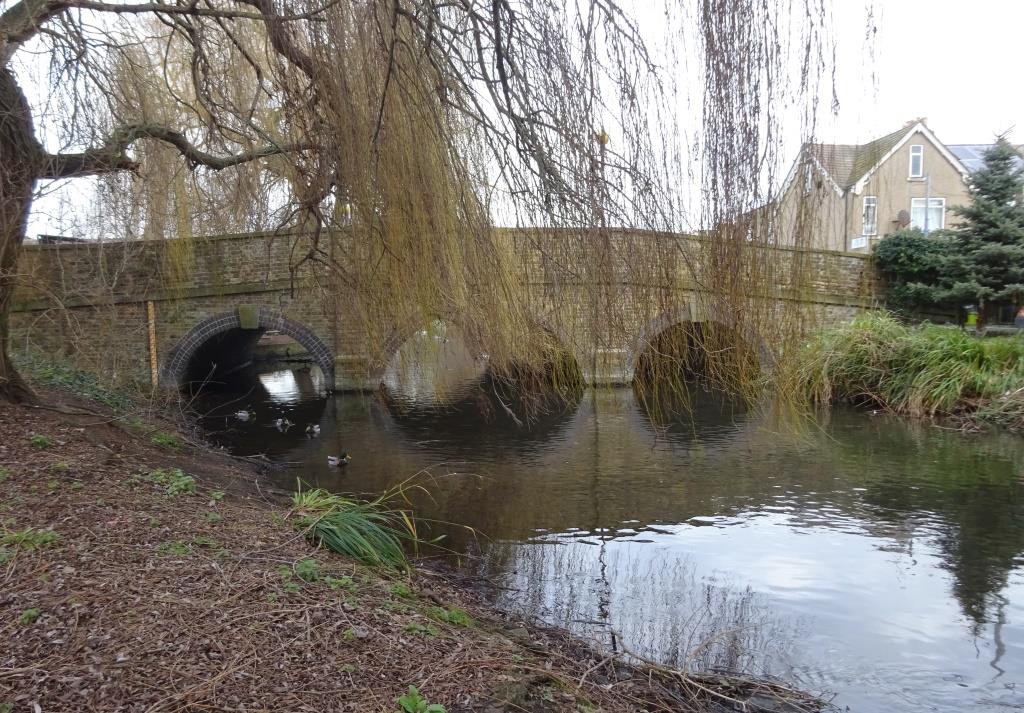
At the gates to Fassnidge Park, keep right along the bank in a pleasant wooded section with the rear gardens of Lawn Road and Victoria Road on the other side of the river. Note the bandstand in Fassnidge Park. After the river disappears underground into a culverted section you emerge onto the Oxford Road. Cross at the lights and turn left to Fountains Mill, now a youth centre. Turn right into old Uxbridge High Street to the bridge over the Fray’s River. Notice the arched brickwork section underneath which the river emerges from the mill buildings. Turn left into Braybourne Close with the river on your right. The houses on your left were built on the course of an old railway line.
This branch railway line was constructed in 1907 to connect a former station in Uxbridge High Street to the Marylebone-Ruislip-Denham-Gerrards Cross line. Never successful, it was closed to passengers in 1939, and then to goods traffic in 1964. The houses in Braybourne Close were built on the line of the railway. It is still possible to walk northerly parts of the route through Denham Lock Wood SSSI and the Frays Valley Nature Reserve.
Soon the footpath bears right away from the pavement to follow the riverbank. After about ½ mile, pass the Alderglade Nature Reserve on your left.
This is managed by the Herts & West Middlesex Wildlife Trust. It is an area of wet woodland and marshland along a disused railway embankment. The trees are dominated by mature crack willow, hawthorn scrub and alder. Along the railway bank species such as birds-foot trefoil and small toadflax can be found. Mammals such as stoats, weasels, moles and foxes have been recorded on the reserve as well as several species of bat, including the uncommon Brandt’s bat. The alder trees support flocks of siskins as winter visitors, and both kestrel and sparrowhawk are frequently seen. Visit the reserve in spring to enjoy a chorus of birds such as chiffchaff, blackcap and song thrush.
Soon after a footbridge, the path turns left away from the riverbank and goes under the old railway line.
It is sometimes possible to turn left after the railway line, turn left up onto the railway embankment, and then turn left along the old railway track on a very rough path heading north. Find a gap in the metal fence just before the railway passes under the A40 Western Avenue, to the open area beyond where you can turn right off the line into Frays Farm Meadows and the bank of the Fray’s River. If this is not possible, then you will need to take the following route.
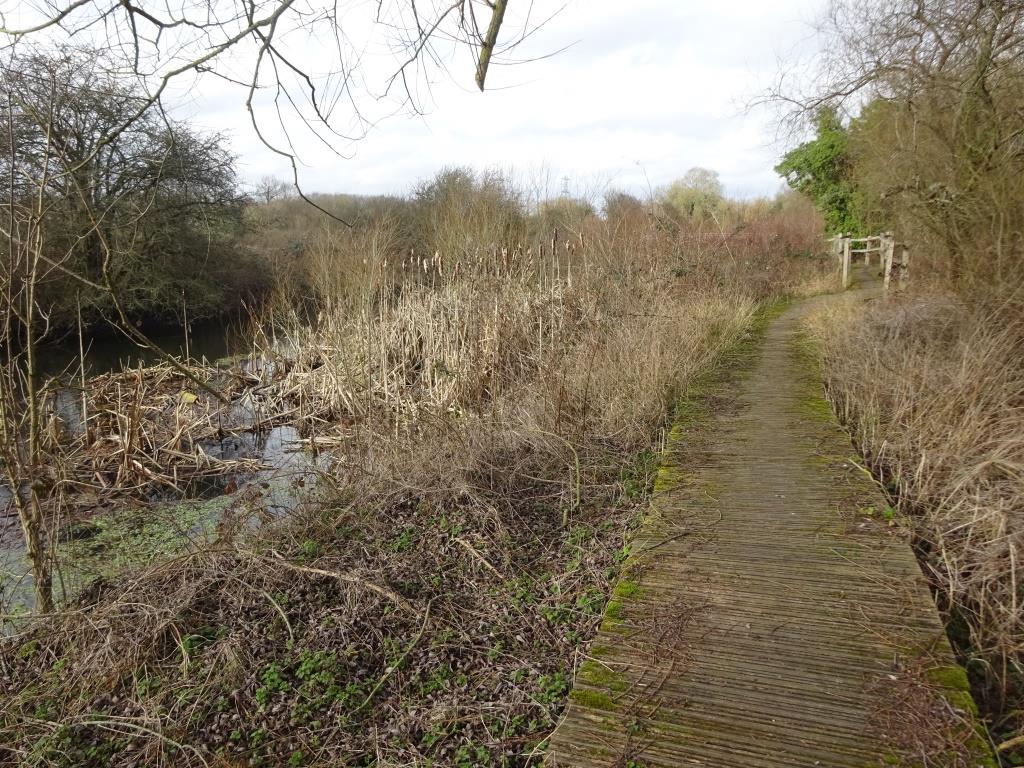
The path crosses Shire Ditch and continues north west. After 100 yards, take a path right into the Frays Farm Meadows Nature Reserve which goes under the A40 Western Avenue. Find a bridge on your right which re-crosses Shire Ditch. You will then be able to cross the old railway line into Frays Farm Meadows and the bank of the Fray’s River. Turn left as the river winds north. After about ½ mile, the river goes under the railway line. You will need to climb onto the old trackbed, cross the bridge, continue for about 50 metres, and find a path on your left which leads down to boardwalk that leads to a bridge across the Fray’s River. Cross here and turn right with the river bank on your right. Soon you will climb a slight slope to Denham Deep Lock on the Grand Union Canal.
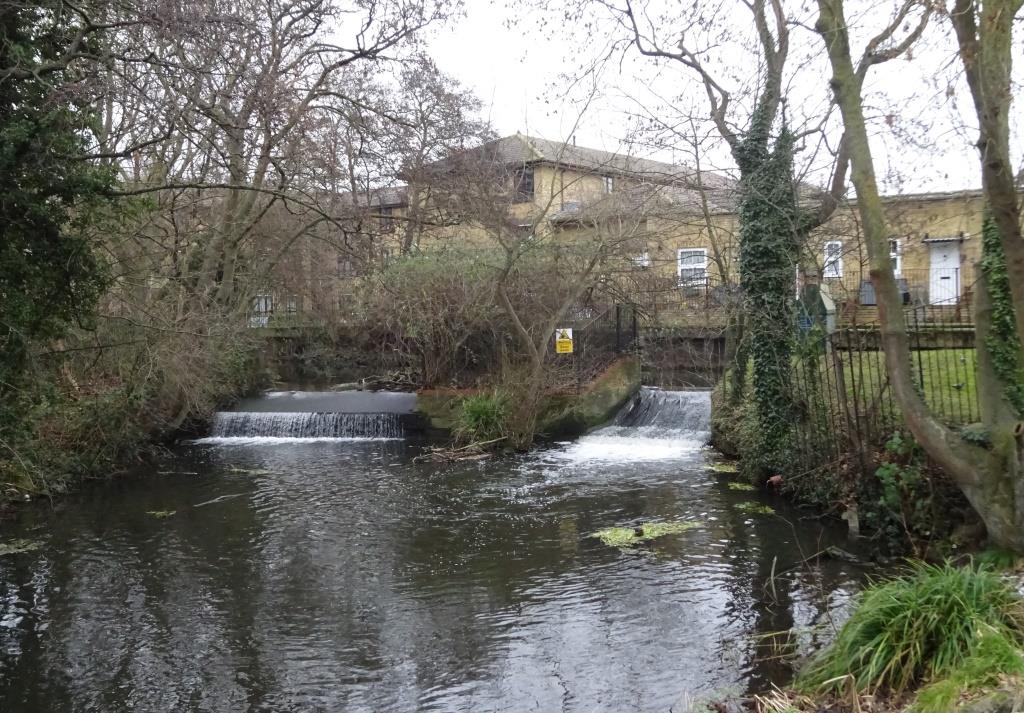
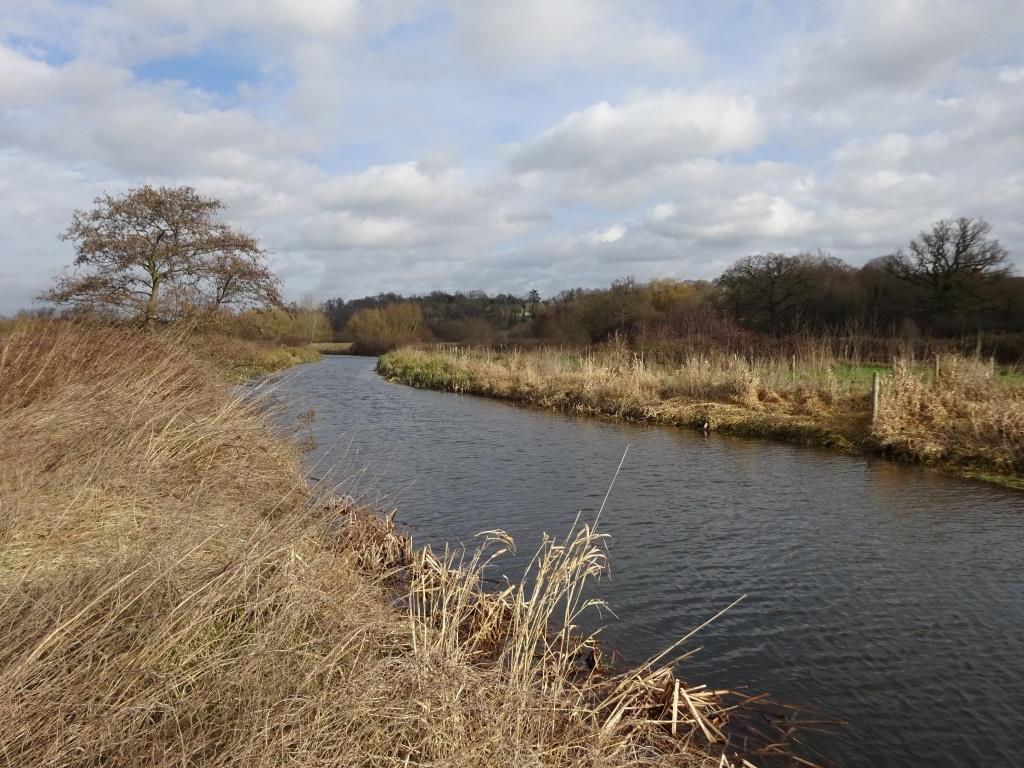
Note the Fray’s River running under the canal. Cross the lock gates with care. Walk north along the canal towpath. At the first opportunity descend left into the wet woodland of Denham Country Park, cross a small ditch and continue in the woodland with the river bank on your left for about 100 yards to view the Fray’s River diverging from the River Colne with weirs on both rivers.
This is the official end of the walk, but you can return to the canal, go south past the lock, turn right on a path over the River Colne and keep right at a fork along its bank to see the Fray’s River leaving the Colne at the weirs.
Continue north if you wish to visit the Colne Valley Park Visitor Centre, car park, café and toilets.