There is growing discussion about encouraging large scale housebuilding in the Green Belt next to railway stations. If this happens, we argue that it must be designed to allow easy access to the countryside for people travelling out of the city by train.
The proposals being championed by housebuilders:
The government wants to revise national planning policy to streamline approvals for “suitable” planning applications near “well-connected” train stations.
In November, housing secretary, Steve Reed, announced this approach would form part of revisions to the National Planning Policy Framework (NPPF). He said: “The government intends to provide a ‘default yes’ to suitable planning applications for development within a reasonable walking distance of well-connected stations.”
Unfortunately, putting this in the NPPF means it is likely to trump any existing Local Plans from local councils.
The viewpoint of the Colne Valley Regional Park:
At a superficial level, and if your only focus is on the housing crisis and growth, then the logic behind building next to transport hubs is understandable. However, in the real world there are other factors at play.
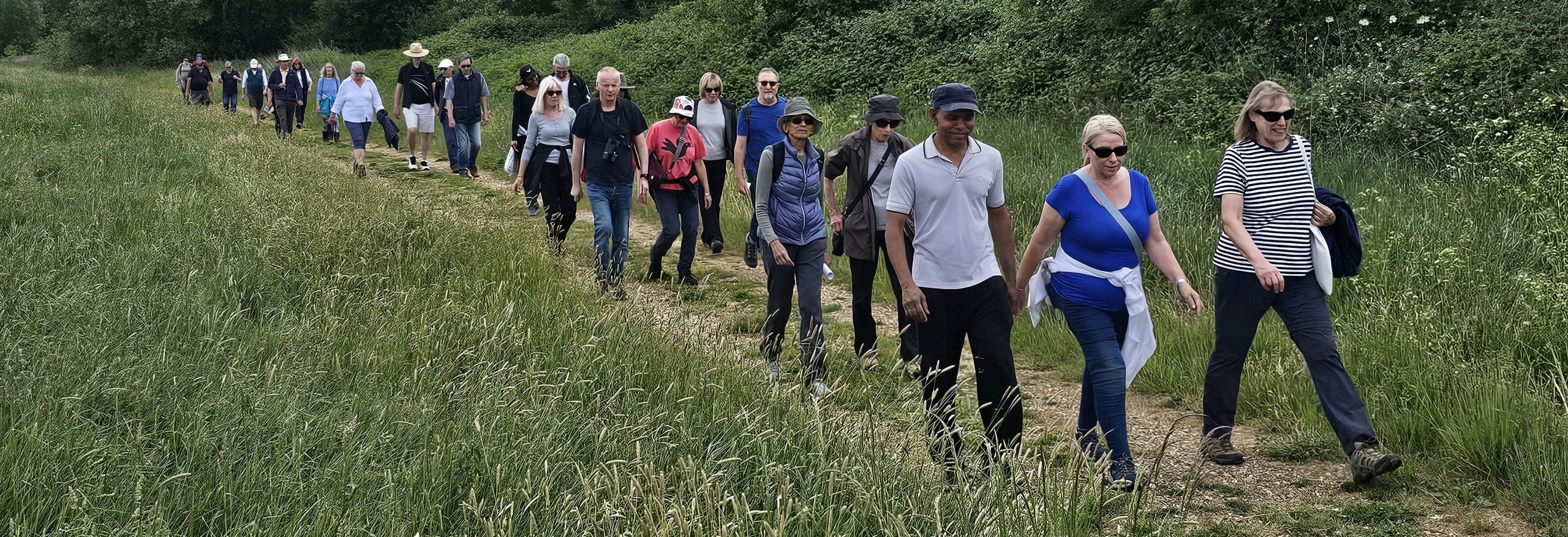
Politicians, decision-makers, planning consultants and housebuilders need to remember that trains travel in both directions and that accessible countryside near railway stations is a great way for city dwellers to have easy access to nature on a much larger scale than they might find in their local parks.
Therefore, if there is to be building near stations, those developments must be designed to include high quality, wide, green corridors that bring the countryside right to the station giving city-dwellers attractive routes by which to reach the countryside around London easily by train. The ‘golden rules’ for building houses in the Green Belt should be used to fund restoration and management of the remaining Green Belt around the development.
In this way the government can achieve its stated ‘win-wins’ for growth and the natural environment.
Win: People get the houses that are so badly needed.
Win: Residents of these new houses, existing local residents and people who travel by train from large urban areas, can all experience high quality accessible countryside.
In addition, if the government is prepared to amend the NPPF to achieve growth and housebuilding targets, then it should also use the same opportunity to amend the national policy to ensure development can be used to fund restoration of the landscape and improve connectivity for people and wildlife.
Rather than a blanket approach across the whole of the Green Belt (which the government would be very unlikely to support) this could be specifically focused on areas like the Colne Valley Regional Park that are:
- Nationally important for wildlife;
- Right on the edge of large cities with millions of potential beneficiaries;
- Subject to multiple large development proposals that could provide the means to improve these green corridors and at no cost to the public purse.